
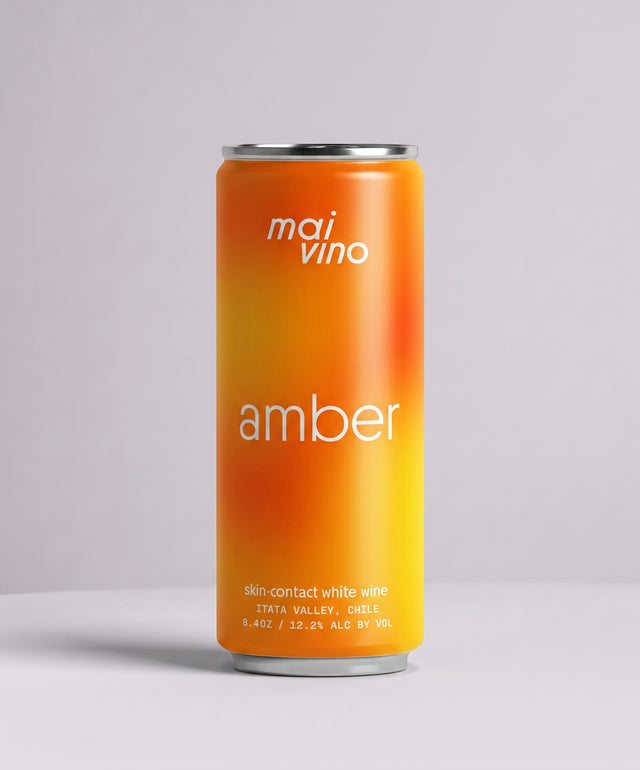
 24 cans = 8 bottles
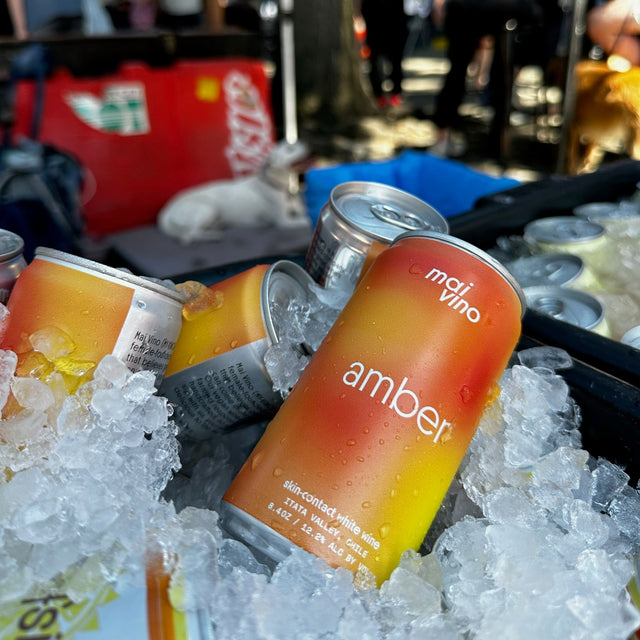 24 cans = 8 bottles
Orange Can - 24 Pack
Not your average white - and that's the point - this is a skin-contact white wine aka as orange wine or amber wine.
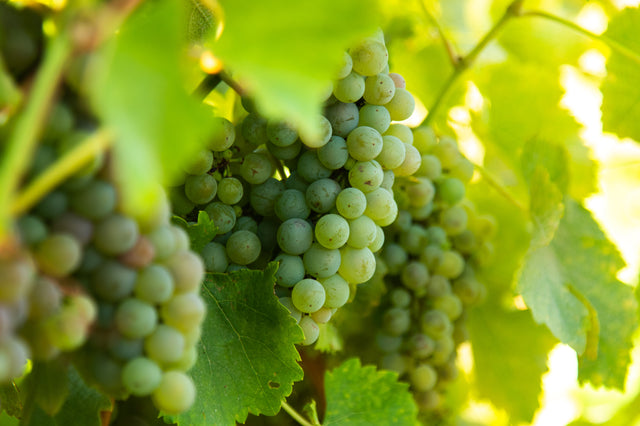
This wine comes from 80-year-old vines in Chile's Itata Valley, one of the oldest coastal ranges in the country. The Moscatel de Alejandria delivers a beautiful perfumed nose - apricot, mango, all of it - while a splash of Semillon brings it back down to earth with herbaceous notes that add balance and complexity.
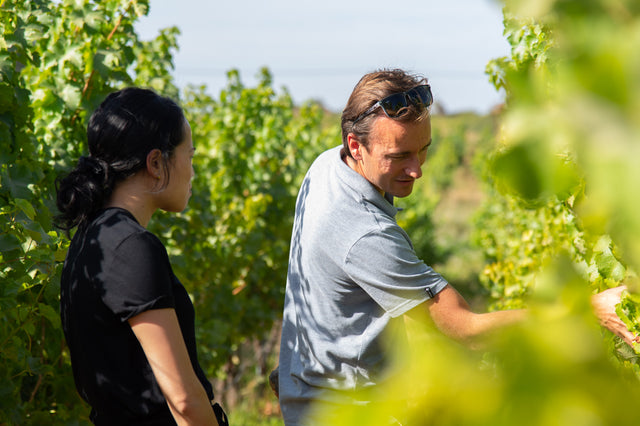
The vines are horse-ploughed once a year and dry-farmed with zero intervention. Once the grapes are harvested, they are left on the skins for 28 days (like red wine). The result is a slightly dried apricot flavors with a smoky white tea finish that lingers - approachable for orange wine newcomers, satisfying for the already converted.
Origin: Itata Valley, Chile
Ingredients: 90% Moscatel de Alejandria (80-year-old vine), 10% Semillon, Vegan-Friendly
Winemaking: Wild fermentation, dry-farmed, left on the skins for 28 days
Alcohol: 12.2%
Dry: 2/5
(1 = Dry, 5 = Sweet)
Body: 2/5
(1 = Light Body, 5 = Heavy Body)





All Natural Ingredients
Mai Vino is made with all of the good stuff, none of the bad.

Our wines are certified organic, which means you won't find any pesticides or herbicides in your glass.

Our wines are naturally fermented dry. That means you're left with 0 grams of sugar per serving.

We don't add any artificial additives, which means you won't feel punished the next day.

Our wines are naturally fermented dry and have 100 calories per glass.
What we don't do
🚫 No pesticides or herbicides
🚫 No mega purple dye
🚫 No sawdust
🚫 No added sugar